PUBLISHED IN: [GHOSTWRITTEN]
How bad for you are eggs…really? Here’s surprising news.
*
“Stay away from eggs if you want to be healthy. They have far too much fat and cholesterol.”
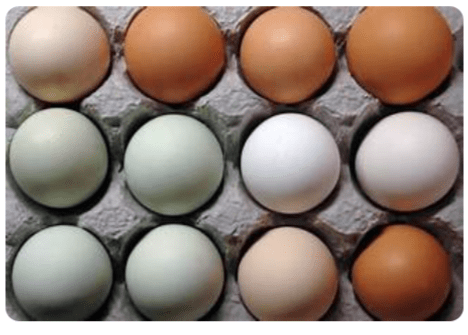
If you’re like most people, you began hearing that information in the 70s, 80s or 90s (depending upon your age). Eggs have received a very bad rap for the past 30 years or so.
But recently, new information and better science are shedding light on how eggs, particularly egg yolks, may be good for you and your liver. So chew on this:
Choline: Your Liver’s Secret Weapon
So if eggs are “fatty” and “full of cholesterol,” how could they actually be good for your liver, especially if your issue is NAFLD (non-alcoholic fatty liver disease)?
The secret is choline, a type of B vitamin micronutrient. Eggs rank very high on the list of foods that are high in either lecithin, which converts to choline, or in choline itself. Note that this is the egg yolks only, not egg whites, which only have traces of this micronutrient.
The body can synthesize this amazing nutrient, but it isn’t an easy process for someone with a compromised liver. That’s why individuals with fatty liver disease need an external source of choline, either in the form of supplements or, even better, directly from food.
In fact, there is some research stating that a diet deficient in choline actually causes fatty liver and liver cell death.
What Choline Does For Your Liver
And now for something a bit more technical.
As we’ve stated, the body can convert lecithin to choline. But it needs a little boost in the form of amino acids. This is particularly true of a person who has fatty liver disease. So, why does your body need choline?
Choline is essential in the production of phosphatidylcholine; a fat molecule called a phospholipid. But wait! Isn’t all fat bad? Not necessarily.
Science is coming around to understanding that certain fats are necessary to the body. In this case, phosphatidylcholine is an essential component of the VLDL (very low density lipoprotein) particle, which our bodies need in order to move fat out of the liver.
Simply put: if you don’t have enough choline, your liver can’t move out fat. It instead begins to collect within your liver, creating fatty liver.
So, although you may think you’re eating fats when you eat eggs (and you are), this special class and type of fats are needed in order for you to get rid of some of the fat you already have. It sounds counter intuitive only because we have been led to believe, in recent decades, that all fat is bad. But science is now discovering that just isn’t true; some fats are required by the body and will actually move things along, not sit around on your hips, belly and thighs…or in your liver.
What About Supplements?
Though cholesterol isn’t necessarily the bad guy we’ve been led to believe it is (we’ll leave that for another article, though!), some individuals do indeed need to restrict their cholesterol. It’s up to you and your doctor to decide whether you will be restricting your cholesterol, and whether that restriction will include eggs.
For such individuals, choline supplements can be helpful. The jury is still out on how well supplemental nutrients work within the body versus nutrients derived from a food source, but if supplements are your only option, there is some good evidence that they can help. If you’re on a restricted diet, don’t leave choline out of the equation entirely. Talk to your doctor about correct dosages of supplementation.
Best Sources of Choline
If you can’t or don’t like eggs, there are many food sources that contain choline. Though there is not yet a conclusive agreement on how much choline is needed by the body, an accepted amount is around 250 milligrams for children, 425 mg for adult women and 550 mg for adult men.
The best food sources, in order of serving size, are the following (3 ounces is about the size of a deck of cards). Though beef liver is listed first, remember that this is serving size. Ounce for ounce, eggs have 3 times the amount of meat*:
Beef liver, 3 ounces – 355 mg
Large egg yolk – 147 mg
Quinoa, 1 cup – 119 mg
Soybeans, 3 ounces – 100 mg
Peanuts, 1 cup – 77 mg
Cod, 3 ounces – 71 mg
Tofu, 1 cup – 71 mg
Broccoli, 1 cup – 62 mg
Shrimp, 3 ounces – 60 mg
Salmon, 3 ounces – 56 mg
Skim Milk, 8 fl. oz. – 20 mg
* Source
Other moderate sources include leafy green vegetables, chicken, turkey, yellow mustard seed, toasted wheat germ cereal, bacon (YUM! but fatty and salty), and beef.
Helping Choline Along
If you’re already getting a good source of choline, you can help the process along in the following ways:
1. Exercise. Boosting your metabolism can have the effect of helping all your body’s processes, including the conversion of lecithin to choline and the liver’s own self-reparative capabilities.
2. Flush frequently. This means getting plenty of water so you can help flush toxins from your system, rather than making your compromised liver do all the work.
3. Reduce stress. Stress actually can have physical effects on your body – and not usually good ones. Meditate, change your attitude, and if possible, change what’s bothering you, like a lower-stress job, better communication with your family or just releasing worries that you have no control over.
4. Eat right. That goes without saying, but getting plenty of vegetables and lean proteins are invaluable to your liver’s efforts in correcting its negative fatty condition.
5. Lose weight. This is paramount to correcting fatty liver. It will also lighten the load (literally!) of your body’s ability to heal itself and stay healthy.
Most importantly, stay current on nutritional research. New information is being developed and tested daily by researchers invested in helping people get healthier. Don’t just discount a certain food because you’ve heard in the past that it “might be bad for you.” In fact, that very food could be a key to your health. Eggs are proof of that.
 Melanie Henson Copywriting
Leave a comment